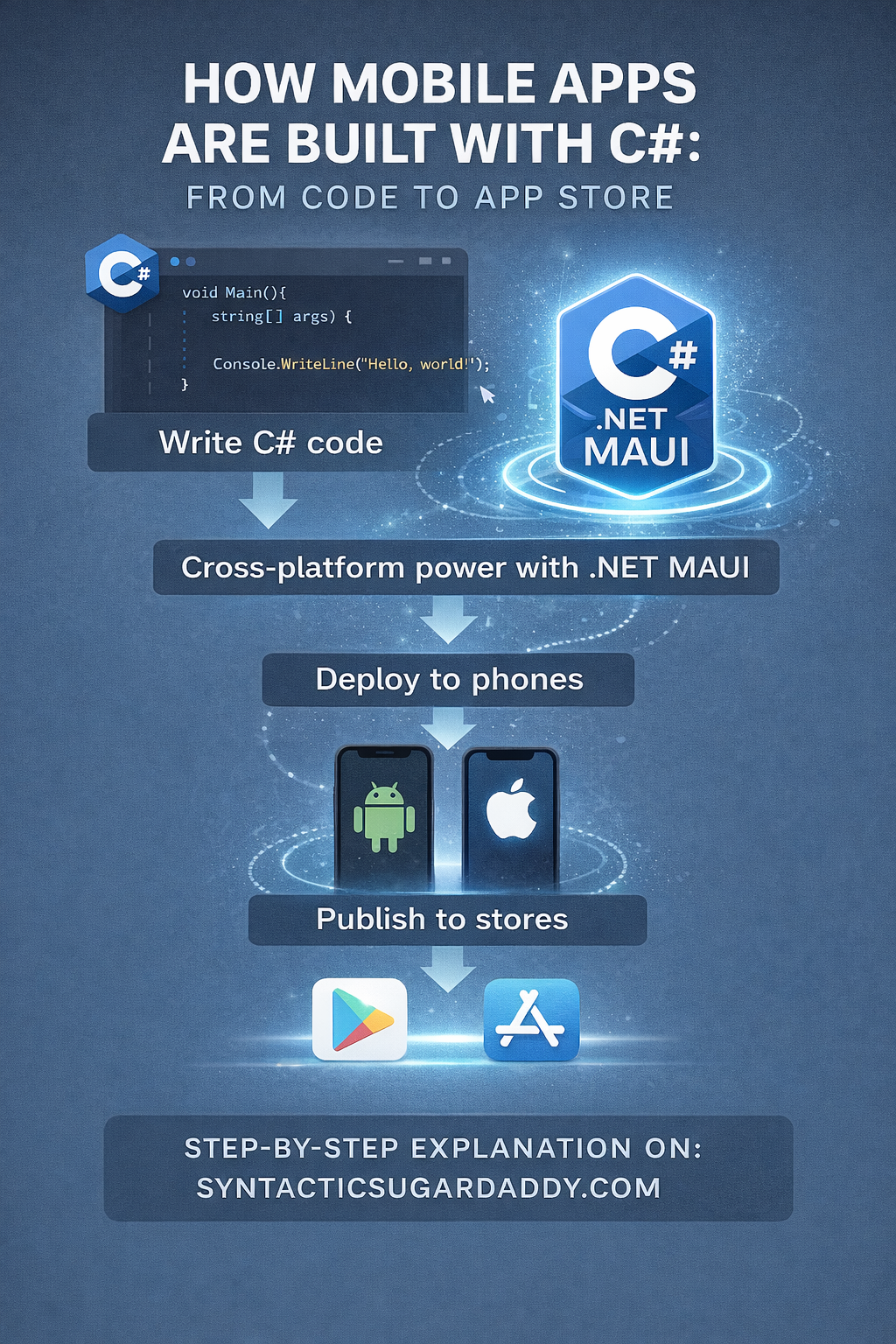
How Mobile Apps Are Built with C#: From Code to App Store
Learn how mobile apps are built using C# and .NET MAUI, from writing code to deploying and publishing apps on Android and iOS app stores.

Script Execution Order in Unity: The Hidden Timeline of Your Game
Unity’s Script Execution Order quietly decides when every piece of your code runs — from setup and physics to rendering and cleanup. Once you understand Unity’s frame timeline, you’ll never wonder why something ran “too early” or “too late” again.

Default Interface Implementations in C#: Why They Exist and How to Use Them Wisely
C# 8 introduced Default Interface Implementations — a quiet but powerful feature that changed how interfaces work. They let you evolve APIs and frameworks without breaking existing implementations. In this post, we explore how DIIMs work, why they were added, and how to use them wisely.

The Unity Component System: Why Composition Beats Inheritance
Unity’s component system is the secret sauce behind the engine’s flexibility. Instead of rigid inheritance trees, it uses a composition model built on GameObjects and Components to create modular and reusable behaviors. Learn why composition is the backbone of modern Unity development.

Garbage Collection in C#: How .NET Cleans Up After You 🧹
C# automatically manages memory through the .NET garbage collector — but understanding how it works gives you real performance control. Learn how the GC tracks references, frees memory, and keeps your programs fast and stable, from generations to compaction and the Large Object Heap.

ScriptableObjects in Unity: The Most Misunderstood Feature
ScriptableObjects aren’t just for storing data — they’re one of Unity’s most powerful architectural tools. Learn how they simplify data sharing, reduce coupling, and drive clean, scalable game systems. With clear examples and tips, this post finally makes ScriptableObjects click.

Functional Programming in C#: Thinking in Functions, Not Objects
C# started as an object-oriented language, but today it quietly blends functional programming principles into its core. From lambdas to LINQ to immutable records, C# now encourages a declarative, composable, and safer coding style. Learn how to think in functions, not objects.

Function Delegates in C#: Why They Exist, How They Work, and Where They Shine
Delegates are type-safe, object-oriented function pointers that let you pass methods like data. This guide explains why they were created, how they work, and how they power events, LINQ, and functional programming in modern C#.

Serialization in Unity Explained: The Secret Behind How Your Data Survives
Unity’s serialization system quietly saves, restores, and even ships your data — whether you’re editing in the Inspector or loading assets at runtime. This post breaks down what serialization is, why it’s critical, and how it actually works inside the engine.

Move Over JavaScript — C# Can Build Full Websites Too
Most developers still think of C# as a backend or desktop language — but with .NET Core, Razor Pages, and Blazor, it’s become a serious full-stack contender. From building responsive frontends to secure, high-performance backends, you can now code entire websites using just C#.
How to Add and Use a Database in a Simple C# Project
Connecting your C# app to a real database doesn’t have to be hard. This beginner-friendly guide walks you through creating and using an SQLite database to store and retrieve data — all with simple, clean code.

Understanding Regular Expressions in C#: A Practical Guide to Powerful Text Matching
Regular expressions in C# let you find, validate, and extract complex text patterns with concise code. Learn how regex works, how to use the Regex class, and when to apply it for practical problems like email validation, formatting, and data cleanup.